
If you’re starting your own business or trying to grow, an essential part of planning is determined by understanding your customers. By focusing on developing solutions that fit their needs, we expect to sell more products or services and generate more revenue.
That’s why business functions like product, marketing and sales work together to identify their core user personas develop solutions that cover their needs, attracting and selling to these customers.
Some marketers I speak to tend to go straight to the campaign execution, asking me how do I set up Facebook, Twitter, Instagram campaign successfully? How do I rank on the first page of google? Many times this doesn’t seem to work. Low conversion rates and a very competitive environment make this very unlikely in the short term.
While other startups and business focus on understanding the needs of a niche market and develop a plan to covering their needs and attracting customers succesfully.
If you want to learn how, I’d suggest you continue reading.
What I will cover in this post
In this post I will help you identify your market and target audience niche. I will also answer the following questions:
- What is the purpose of customer personas?
- How to create a customer persona?
- What is an example of a persona?
- How do I use the information from developing customer personas?
What is the purpose of developing customer personas?
A common issue among teams can be to focus too much on the product or technology, developing features and forget that instead where the focus should be is on serving the needs of valuable customers.
Aligned with the business, marketing and product should try to identify the most valuable customers, or the ones that can better serve. From there develop a plan to engage with them and sell your products and services.
Developing a customer persona is a way to identify a group of people with similar traits that could be interested in your product or service. It is a helpful way to know that you can add value to them based on how much you think you can sell.
This exercise will inform product and promotion planning, making sure you are able to produce a solution and also attract customers by delivering the right message to the right audience at the right time.
How to develop customer personas?
We can assume you already have an idea of who your customers are or you’re looking to attract. But it is a good practice to deep dive into different data sources that will uncover valuable insights that you can use to develop your customer personas and marketing plan. Here a couple of relevant examples:
You should start by identifying where is the volume or most valuable segments. This is called identifying the opportunity. Later you can workon qualifying these segments.
1. Identifying the most valuable segments
Some marketers assume they know their target audience and they have been marketing them for so long. However it is always a good practice to deep dive into new sources of data to uncover hidden but in many cases very valuable insights. Some sources you can use:
– CRM or E-commerce platform
Start by using data you already hold. If you are selling a product pick data from your CRM or eCommerce platform, use this data to build a profile of the most engaged or the most profitable users. Look at the higher value orders, the customers with the highest frequency of purchases or the longest lifetime value.
– Google Analytics
If you don’t have a CRM yet but you have Google Analytics, you can look at the most engaged users / customers. You can do this by looking at different reports such as: Behaviour > Frequency and recency, eCommerce or conversion reports.
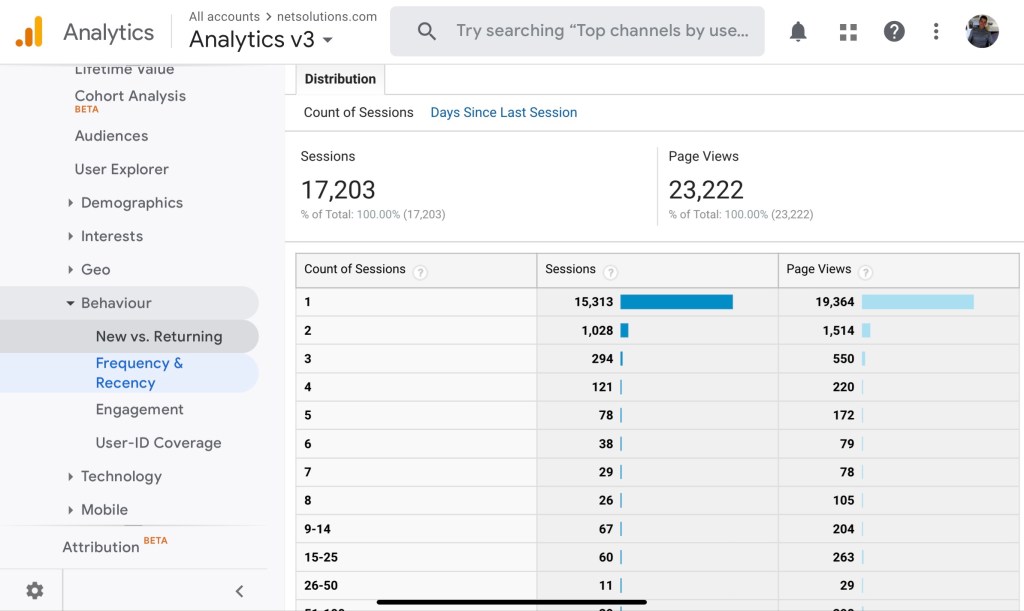
Build out segments of these and then look at other reports such as: Demographics, Interests, Geo, Behaviour, Technology. There is so much you can learn from these reports. Deep dive into it!
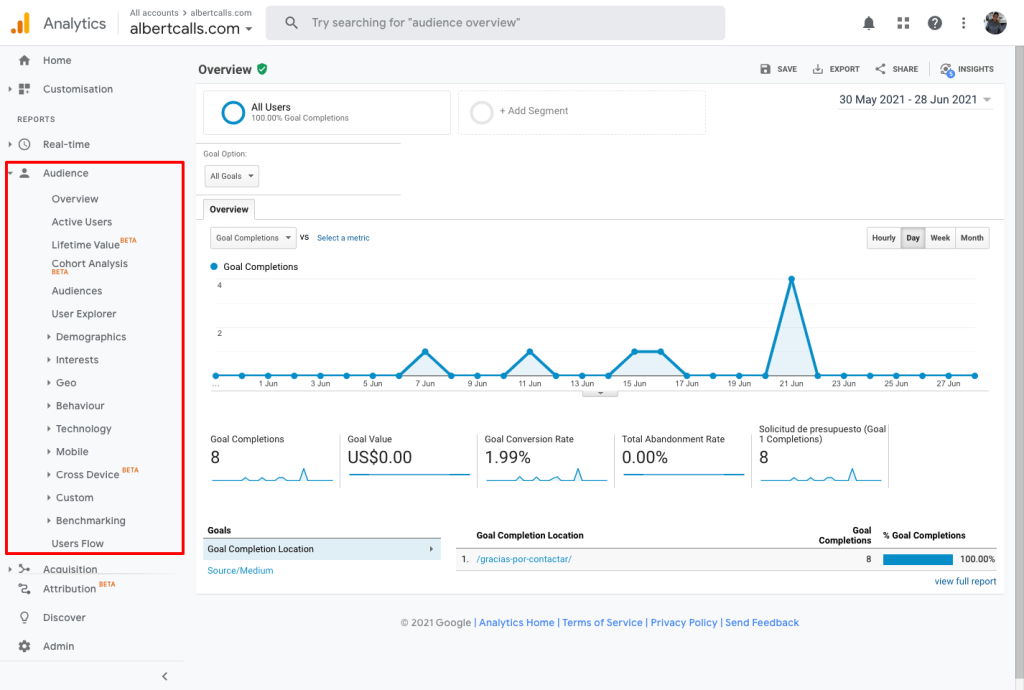
If you have not taken off or you want to explore other potential customers you have not served you can use external tools and sources:
If these are business you’ll be looking at 2 type of information. Create a LinkedIn ads account to gather the information.
- Firmographic: This is the information that relates to the type of business. And includes: The industry, the size of the business, the geographies, status and performance of the business. You could also be looking at other specifics that can be relevant to your business such as volume of a specific product bought that is relevant to your business. Use this information to size the number of companies/professionals you could reach.
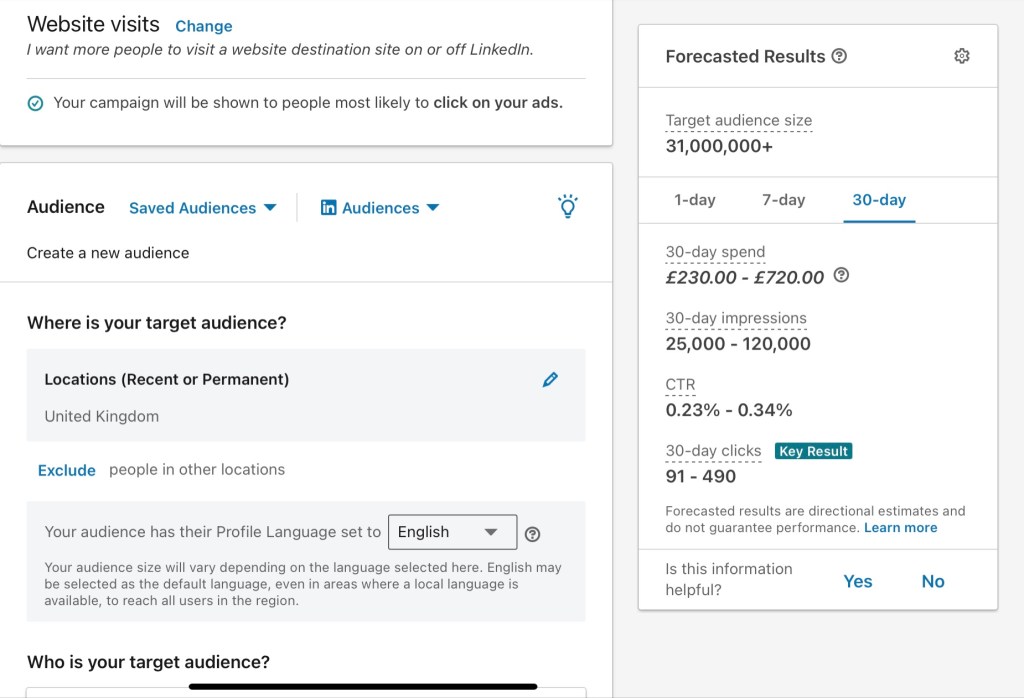
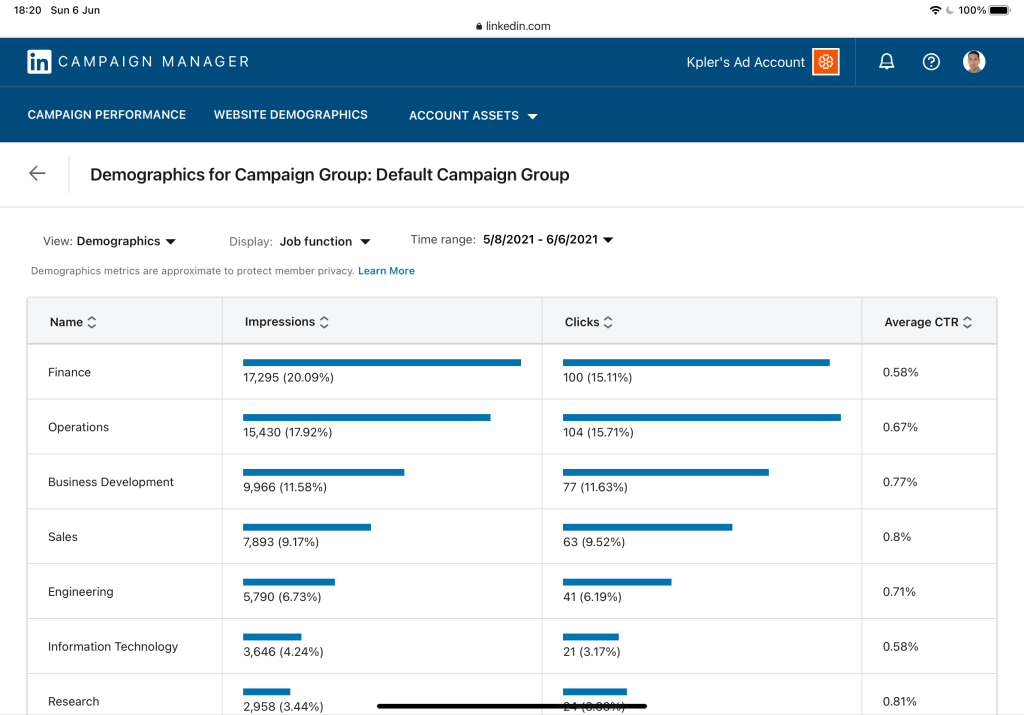
- Demographic: This is the information related to each one of the buying personas. This includes: Job title, seniority, age, geographies, earnings, gender, education, industry and other traits that make this relevant. You just need to install LinkedIn snippet into your website and access the “Website demographics” report in LinkedIn advertising platform.
– Google Ads keyword research tools
This is a very powerful tool that provides insights about interests on specific topics. Use Google trends to identify what are the “terms” or “topics” with more searches, the regions, devices (mobile, tablet & desktop) used and other interesting trends.
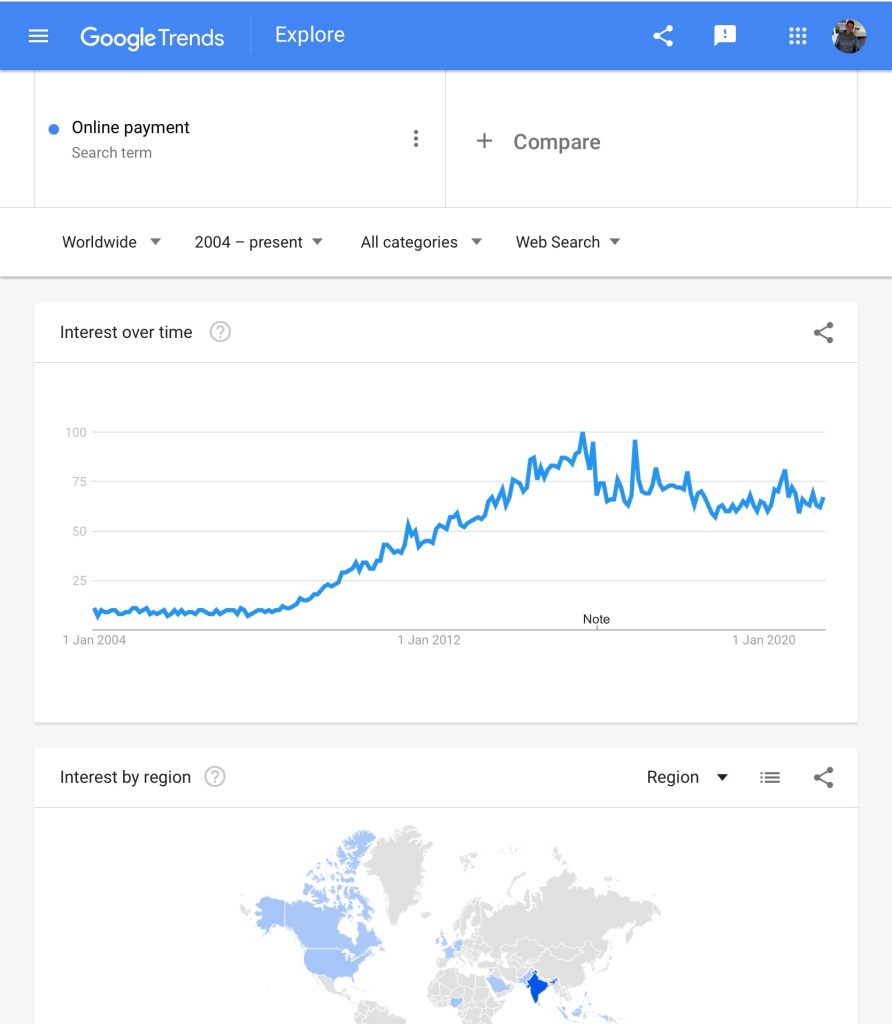
Use google keyword planner to identify search volumes and also evaluate the competitiveness of specific keywords and even CPC’s

– Business database information
Business are generally registered, there are databases you can access and use to generate a report of who, where and the size of your potential target audience. There are multiple providers of this information such as Experian or Beuhurst are examples for the UK market.
– Market sizing through specialised agencies
For more sophisticated projects with significant big budgets, you could work with a business strategy research firm that can help you do more advanced and accurate research. Depending on your budget and the quality of the data you are looking for, the cost will vary.
You have identified the specific segment that you think is underserved or can become a market you can successfully supply. Now you have to define the traits of the different buyer personas. Build a qualitative profile of them that includes:
2. Qualify the groups or segments you have identified
Gather information that will help you develop content or messaging framework and a media plan.
Interests/needs, pain points and behaviours: This information is very important to inform the value proposition, content plan, and product development plan. You can also think about their decision-making process. Think about the main questions they face when going through that decision.
- Organise interviews to your target audience, you can use a variety of methods to collect these: Face to face interviews: this is a great way to gather insights when you’re not familiar with the audience. During the interview, you can also deep dive into their decision-making process. (Awareness, consideration, decision and purchase). Paying attention to the who, when, how and why.
- Forms and questionnaires: this is a good way to validate the insights you picked up from the interviews. Run this survey through a broader number of people to make sure you gather the relevant insights.
– Media consumption habits: Identify what are the channels they spend time through their decision-making process, where they go to do their information research, compare products or get inspiration.
You can figure this out yourself very easily. Examples of this could be: YouTube for leisure, Facebook or LinkedIn for networking, Google for research, specialised magazines for specific professional or personal research and discovery.
If you’re looking for more research-based insights, you can use a variety of sources to understand the specific habits of what has become an ever-changing behaviour, listing below a couple of relevant sources:
Use the selection of channels you have identified to develop a media plan. This media plan will also be liked to your business objectives and budget. (You can figure out how much budget you need to invest in a simple way, as I had explained here).
What is an example of a persona?
The below example illustrates the customer personas of a payments decision-making team in a corporation. Who is involved in making a decision in the purchase of new software or service.
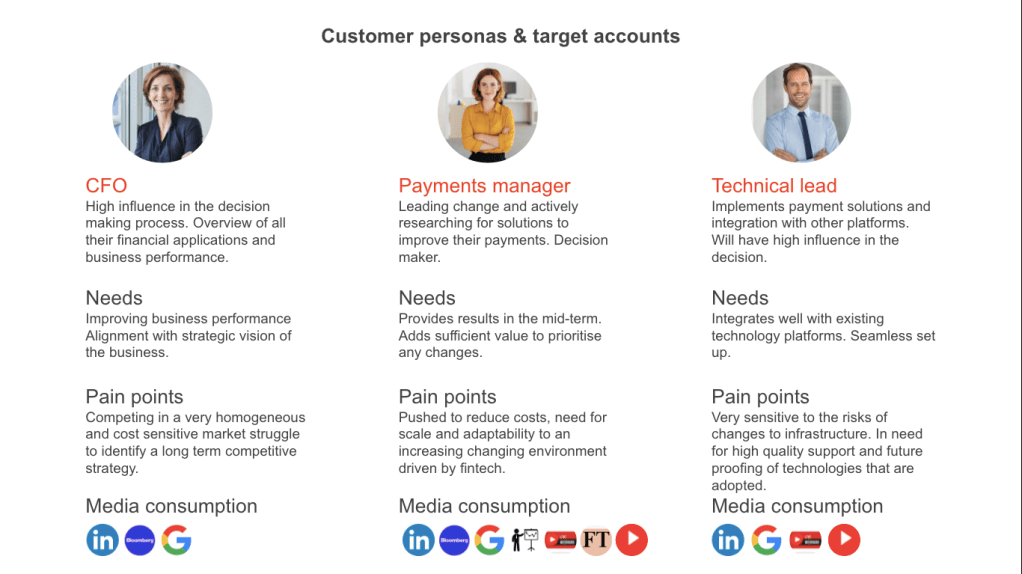
In many cases, it’s not just a unique decision-maker, especially in B2B, which is formed by a committee. A group of people with different roles work together to make a decision. It will be the marketeer’s job to identify these personas and ensure the strategic research is completed. This research will lead to a comprehensive go-to-market plan.
Most common personas in B2B environments are comprised by:
- Senior leader
- Manager
- Technical lead
Other people will also be involved in the process, such as Procurement and legal teams. These might not play as much of a significant role in influencing the decision but will likely be involved in the process. Having them in mind and anticipating how to answer their questions should help smooth out the process.
Customer personas development can include information such as:
- Demografic, firmografic information such as Job titles and job functions, size and industry of business.
- Needs: To understand what they are looking for and what they care about
- Pain points: To understand what are the main issues they face
- Media consumption habits: To understand where they spend time, what type of content and through which channels
How do I use the information from developing customer personas?
With this information, you can have a clear picture of who your target audience is, what they care about and where they spend time. These are the insights that will help you develop a go-to-market and campaign plan to target the right audience, with the right message at the through the right channels.
The output of this work will be:
- Content and messaging framework and plan
- Media plan
The above are orchestrated through campaigns and these campaigns are meant to influence the target personas awareness and behaviour and eventually convert these to customers.
Do you have questions about how to develop customer personas for your business or project? Feel free to ask this in the comments below.
 Cristian 360
One thought on “Developing b2b customer personas for effective marketing planning”